Eid is a day of joy, gratitude and togetherness that Allah has gifted to this ummah. Muslims celebrate two Eids every year: Eid al-Fitr at the end of Ramadan and Eid al-Adha on the 10th of Dhul-Hijjah. Each comes with beautiful Sunnah practices, a few important rulings and plenty of room for halal celebration. This guide brings them together so your family can celebrate the way the Prophet ﷺ taught.
The Night Before Eid
From the sunset that ends Ramadan, Muslims begin the takbir. Allah says about completing the month of fasting: "...and that you complete the period and glorify Allah for that to which He has guided you, and perhaps you will be grateful" (Quran 2:185).
A common form of the takbir is: Allahu akbar, Allahu akbar, la ilaha illallah, wallahu akbar, Allahu akbar, wa lillahil-hamd. Say it at home, in the market and on the way to the prayer, men aloud and women more quietly.
For Eid al-Adha, the takbir is said throughout the first ten days of Dhul-Hijjah, and especially after the obligatory prayers from Fajr on the Day of 'Arafah until 'Asr of the 13th, according to many scholars.
Sunnah Acts on the Morning of Eid
1. Take a bath (ghusl)
Ibn 'Umar (may Allah be pleased with him) used to take a bath before going out for Eid, and scholars agree it is recommended.
2. Wear your best clothes
The companions used to dress well for Eid. You do not need to buy new clothes; wear the best and cleanest clothes you have. Men may wear perfume.
3. Eat dates before Eid al-Fitr
Anas (may Allah be pleased with him) reported that the Prophet ﷺ would not go out on the morning of Eid al-Fitr until he had eaten some dates, and he ate an odd number (Sahih al-Bukhari 953).
4. Delay eating on Eid al-Adha
On Eid al-Adha the Prophet ﷺ did not eat until he returned from the prayer (Jami' at-Tirmidhi 542), and he would then eat from his sacrifice.
5. Take a different route back
Jabir (may Allah be pleased with him) reported that on the day of Eid the Prophet ﷺ would return by a different route from the one he took going out (Sahih al-Bukhari 986). This spreads greetings, lets more people see the joy of Islam and lets both routes witness your worship.
6. Go to the Eid prayer with the whole family
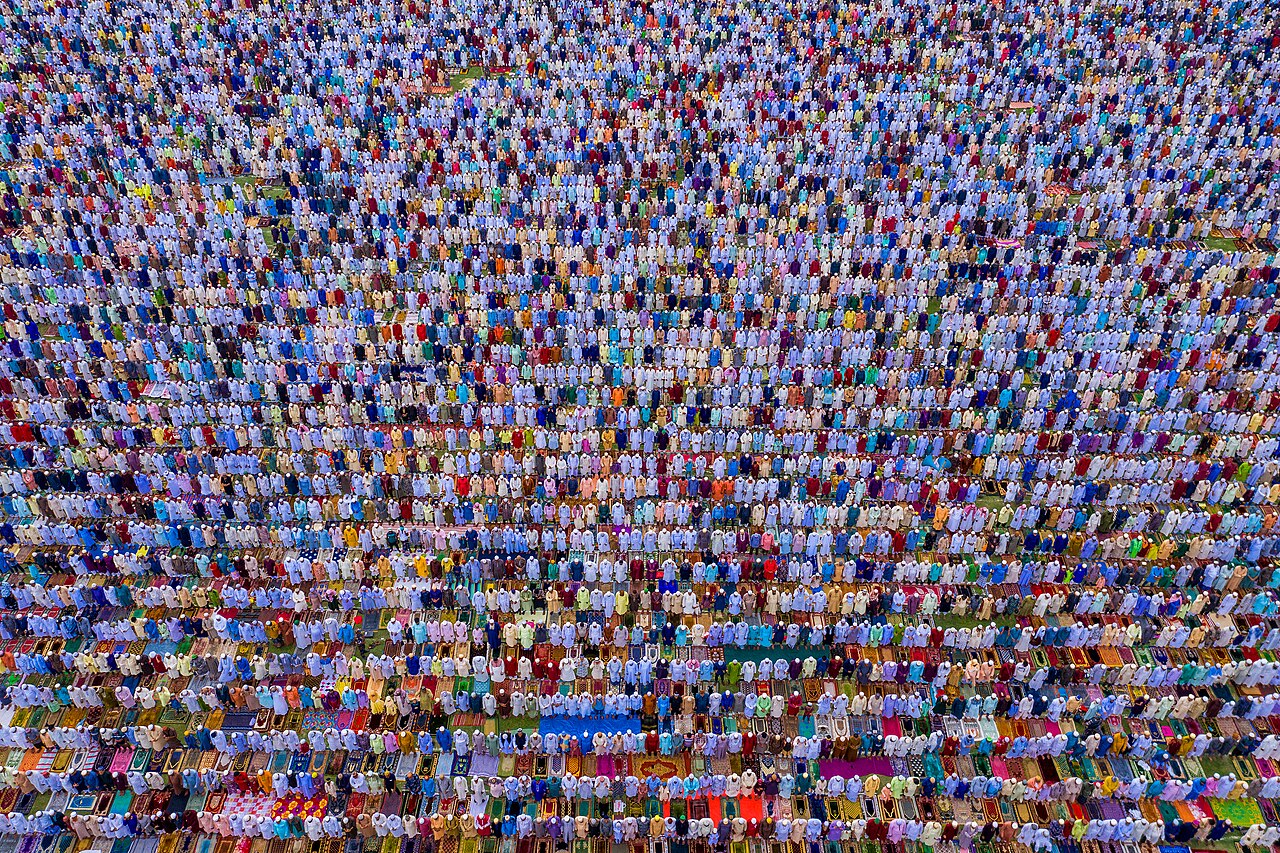
The Prophet ﷺ even commanded that young girls and women be brought out to witness the good and the gathering of the Muslims (Sahih al-Bukhari 324). In Bangladesh, large Eid congregations are held in eidgahs and mosques across every city. Use MosqueByMe to find the nearest mosque or eid jama'at and plan your route early, because roads become crowded.
Zakat al-Fitr: Rulings and Timing
Zakat al-Fitr (called fitra in Bangladesh) is an obligatory charity connected to Eid al-Fitr.
Who must pay it?
Ibn 'Umar (may Allah be pleased with him) said that the Messenger of Allah ﷺ made zakat al-fitr obligatory, one sa' of dates or one sa' of barley, upon every Muslim, slave and free, male and female, young and old, and commanded that it be given before the people go out to the prayer (Sahih al-Bukhari 1503). The head of the household pays it for himself and his dependants, including children.
Why is it given?
Ibn 'Abbas reported that it purifies the fasting person from idle talk and obscenity and feeds the poor (Sunan Abi Dawud 1609, graded hasan). It also ensures the poor can celebrate Eid too.
When should it be paid?
- The best time is on the morning of Eid before the prayer.
- Companions used to give it a day or two before Eid, so paying a little early is permitted so that it reaches the poor in time.
- Delaying it until after the Eid prayer without excuse is not allowed; it then counts as ordinary charity according to the hadith of Ibn 'Abbas.
How much?
The amount is one sa' (roughly 2.5 to 3 kg) of a staple food. The Hanafi school permits paying its value in money and uses half a sa' for wheat. In Bangladesh, the Islamic Foundation announces the minimum and maximum fitra amounts in taka every Ramadan, so check the current year's announcement.
The Eid Prayer
The Eid prayer is two rak'ahs, prayed after sunrise, without adhan or iqamah, followed by a khutbah. There are extra takbirs in each rak'ah; the number differs between schools (for example, the Hanafi school has three extra takbirs in each rak'ah). Follow the imam. Listen to the khutbah after the prayer; it is part of the Sunnah of the day.
Celebrating Within Halal Boundaries
Islam does not ask us to celebrate quietly or sadly. When Abu Bakr objected to two young girls singing on Eid, the Prophet ﷺ said: "O Abu Bakr, every nation has its festival, and this is our festival" (Sahih al-Bukhari 952).
- Exchange greetings: the companions said to each other "Taqabbalallahu minna wa minkum" (may Allah accept from us and from you).
- Visit family: Eid is a great time to maintain kinship ties.
- Give Eid gifts (eidi): children especially look forward to them.
- Host with moderation: enjoy good food but avoid waste and showing off.
- Keep the prayers: do not let visits cause you to miss Dhuhr or 'Asr.
- Avoid the haram: free mixing that crosses Islamic limits, music events with immoral content and extravagance spoil the blessing of the day.
Eid al-Adha: The Sacrifice (Qurbani)
For those able, sacrificing an animal on Eid al-Adha is a confirmed Sunnah, and wajib for those who meet the conditions in the Hanafi school. It is done after the Eid prayer and may continue through the days of tashriq. The meat is commonly divided into three parts: for the family, relatives and friends, and the poor.
Frequently Asked Questions
Can Zakat al-Fitr be paid for a baby born on the night of Eid?
If the child is born before the dawn of Eid (or before sunset of the last day of Ramadan according to some schools), the fitra should be paid for the child.
Can women pray the Eid prayer?
Yes. The Prophet ﷺ encouraged women to attend the Eid gathering. Many mosques arrange a separate area for sisters.
Is fasting allowed on the day of Eid?
No. The Prophet ﷺ forbade fasting on the two days of Eid (Sahih al-Bukhari 1991).
What if I miss the Eid prayer?
Scholars differ. Some say it can be made up as two rak'ahs; others say it is not made up. Ask your local imam.
Taqabbalallahu minna wa minkum. May your Eid be full of faith, family and gratitude.
Image Credits
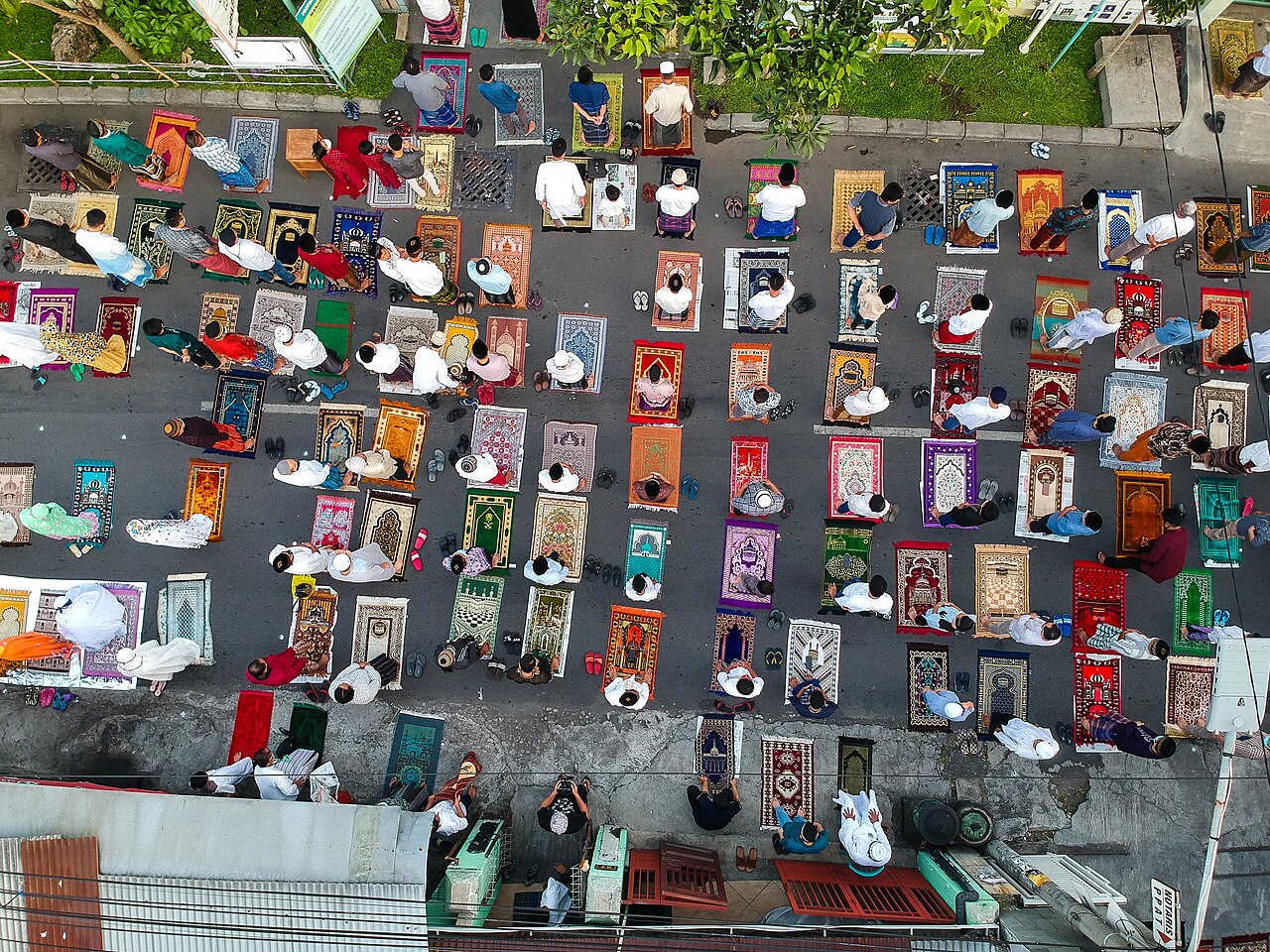
- Eid al-Fitr prayer at the Al-Hikmah Kebonsari Mosque.jpg by Mumun96, CC BY-SA 4.0, via Wikimedia Commons
- Eid Prayer in Bangladesh (DJI 0447).jpg by Azimronnie, CC BY-SA 4.0, via Wikimedia Commons
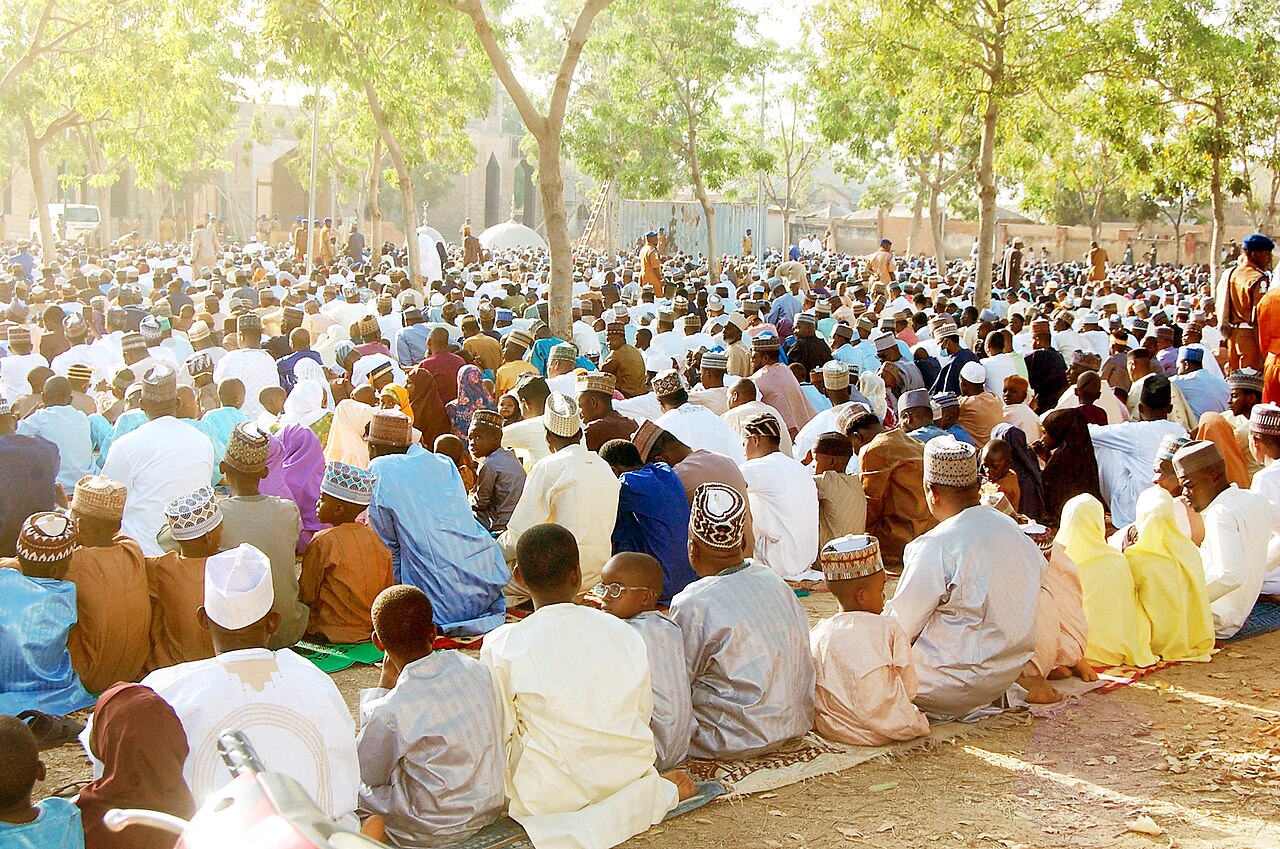
- Eid Celebration day.jpg by Bembety, CC BY-SA 4.0, via Wikimedia Commons
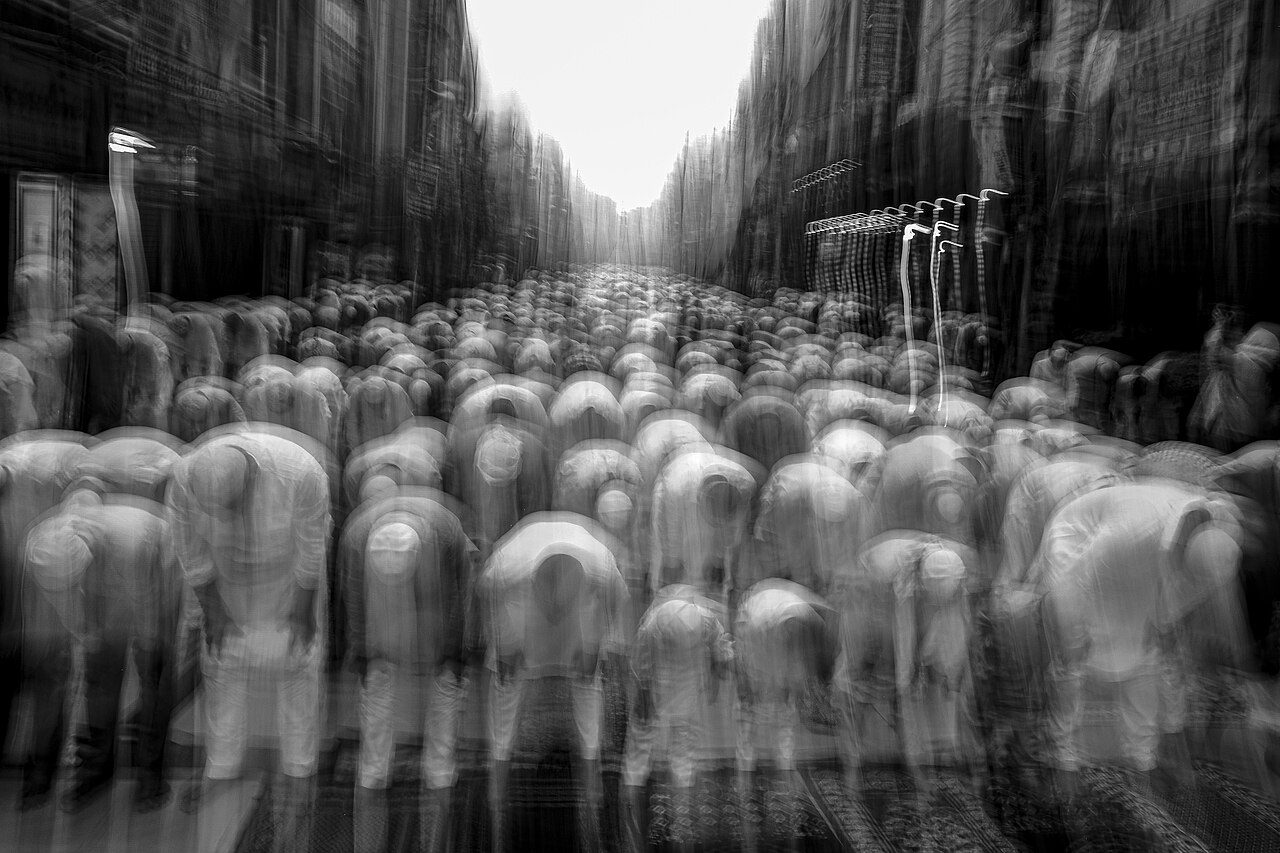
- A Sea of Devotion- The Surreal Unity of Eid Prayers.jpg by Sannidh26, CC BY-SA 4.0, via Wikimedia Commons