You say "Allahu Akbar", and a few seconds later you are thinking about work, the shopping list or a conversation from yesterday. Then you reach the salam and realise you barely remember what you recited. If this sounds familiar, you are not alone. A wandering mind is one of the most common struggles in salah. The good news is that khushu', humble focus and presence of heart, is a skill that can be developed. Here are five practical ways to achieve it.
What Is Khushu' and Why Does It Matter?
Allah says: "Certainly will the believers have succeeded: they who are during their prayer humbly submissive" (Quran 23:1-2). Khushu' is a state of the heart that shows in the body: stillness, a lowered gaze, and calm movements. It is the soul of the prayer. A prayer without khushu' may still fulfil the obligation, but the reward and the effect on our character depend greatly on how present we are.
Khushu' is not about never having a stray thought. It is about returning to Allah each time the mind drifts, again and again.
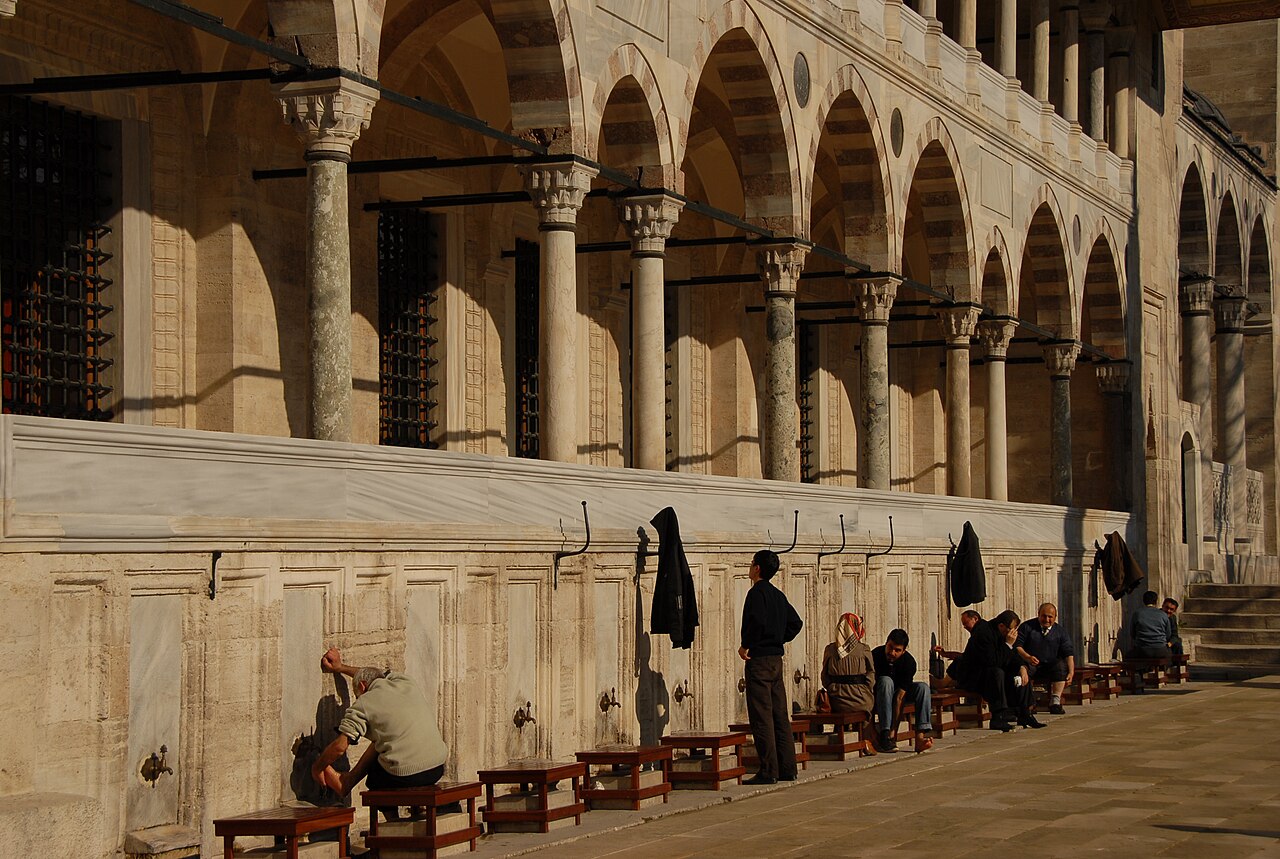
1. Prepare Before You Start: Mindful Wudu
Focus begins before the prayer. The Prophet ﷺ said that when a believer washes his face in wudu, every sin he looked at with his eyes leaves with the water, and similarly with the hands and feet, until he comes out purified of sins (Sahih Muslim 244).
How to make wudu a moment of transition
- Make the intention consciously: "I am preparing to stand before Allah."
- Do it slowly and completely, without wasting water.
- Say the supplication after wudu: "Ash-hadu an la ilaha illallahu wahdahu la sharika lah, wa ash-hadu anna Muhammadan 'abduhu wa rasuluh" (Sahih Muslim 234).
Step away from screens five minutes early
If you move straight from social media to prayer, the images and notifications follow you onto the prayer mat. Put the phone down when you hear the adhan, repeat its words, then make wudu. Five quiet minutes change the whole prayer.
Remove distractions
The Prophet ﷺ taught that one should not pray when food is served and one is hungry, or while resisting the call of nature (Sahih Muslim 560). Take care of your needs first so your mind is free. Choose a plain place to pray, away from the television and busy patterns.
2. Understand What You Are Saying
It is very hard to focus on words you do not understand. Most of us recite the same short surahs every day, so learning their meaning has a huge effect.
- Al-Fatihah: learn its meaning verse by verse. In an authentic hadith qudsi, Allah responds to each verse the servant recites (Sahih Muslim 395). Imagine that response as you pause after each verse.
- The adhkar of ruku' and sujood: "Subhana Rabbiyal-'Azim" means "Glory be to my Lord, the Most Great". "Subhana Rabbiyal-A'la" means "Glory be to my Lord, the Most High".
- Short surahs: learn one new surah's meaning every week, starting with al-Ikhlas, al-Falaq and an-Nas.
Vary the surahs you recite. Using the same two surahs for years makes autopilot almost certain.
3. Slow Down and Be Still
Rushing and khushu' cannot exist together. Give each position its full right of stillness (tuma'ninah). Recite with a calm pace, pause at the end of verses, and do not move to the next position until your body has settled. You may find that slowing down by just one minute makes the prayer feel completely different.
Keep your gaze on the place of prostration. This simple Sunnah prevents the eyes from wandering and pulling the mind with them.
4. Deal With Waswas the Prophetic Way
A companion, 'Uthman ibn Abi al-'As, complained to the Prophet ﷺ that Shaytan came between him and his prayer and confused his recitation. The Prophet ﷺ said this was a devil called Khinzab, and told him: when you sense him, seek refuge in Allah from him and spit lightly to your left three times. 'Uthman said he did this and Allah removed it from him (Sahih Muslim 2203).
What this means in practice:
- Do not panic or feel your prayer is ruined when thoughts come. Gently return.
- Seek refuge in Allah (a'udhu billahi minash-shaytanir-rajim) when distractions are strong.
- If you suffer from obsessive doubts about wudu or the number of rak'ahs, follow the Sunnah of building on certainty and ignoring excessive doubts. If it is severe, speak to a scholar and, if needed, a mental health professional.
5. Pray as if It Is Your Last Prayer
A well-known piece of advice from the Prophet ﷺ is to pray the prayer of one who is bidding farewell (reported by Ibn Majah 4171 and Ahmad, graded hasan by several scholars). Before you begin, remind yourself that this could be your final prayer. Remember that you are standing before the King of kings, who hears every word.
Build the environment of the mosque
Praying in congregation, especially for men in the mosque, helps focus. The rows, the imam's recitation and the quiet atmosphere support khushu'. If you are new to an area, MosqueByMe can show you the nearest mosques and give walking directions so that reaching the jama'ah is easy.
A Simple Weekly Plan for Khushu'
- Week 1: Phone away at the adhan, slow wudu.
- Week 2: Learn the meaning of al-Fatihah.
- Week 3: Add stillness in every position.
- Week 4: Learn two new short surahs and use them.
Frequently Asked Questions
Is my prayer invalid if my mind wanders?
No. According to the majority of scholars, the prayer remains valid, but the reward is related to how much of it you were present for. Keep striving.
Can I close my eyes to focus?
The Sunnah is to keep the eyes open and look at the place of prostration. Many scholars say closing them is disliked unless there is something distracting in front of you.
How long does it take to develop khushu'?
It is a lifelong journey. Most people notice a real difference within a few weeks of consistent effort.
Does reciting longer surahs increase khushu'?
Not necessarily. Understanding and reflecting on a short surah is better than racing through a long one.
Khushu' is a gift from Allah. Ask Him for it in your du'a and take the practical steps, and He will open the door.
Image Credits
- Ablution (Wudu) Süleymaniye Mosque, Istanbul (6328282594).jpg by np&djjewell, CC BY 2.0, via Wikimedia Commons
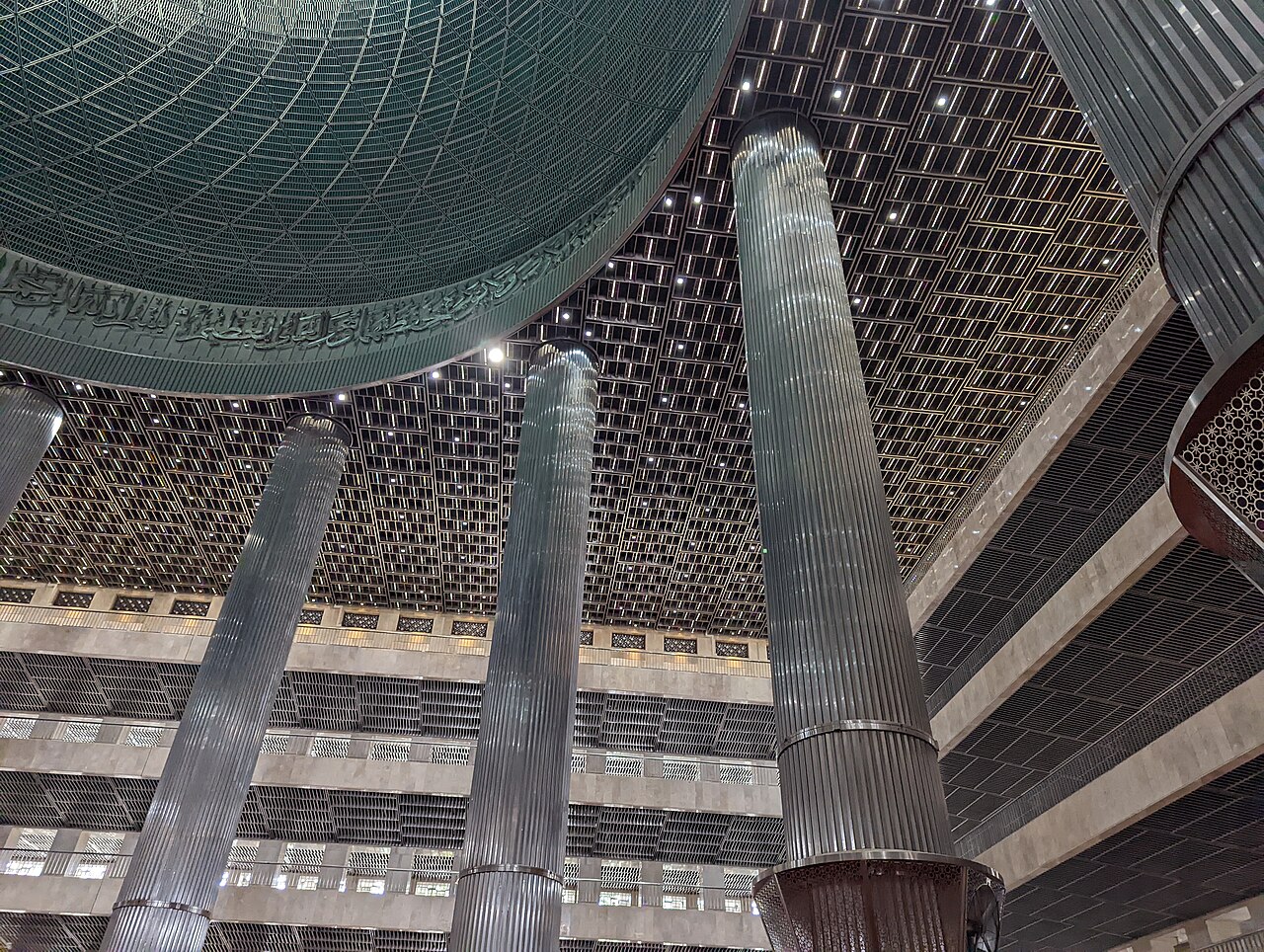
- Istiqlal Mosque Jakarta prayer hall interior view 04.jpg by Aisha Tanduk, CC BY-SA 4.0, via Wikimedia Commons
- Détails du Mihrab 03.jpg by IssamBarhoumi, CC BY-SA 4.0, via Wikimedia Commons